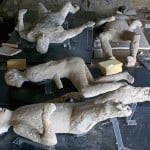
İtalya’nın Napoli kenti yakınlarındaki Pompei antik kentini yok eden Vezüv Yanardağı patlamasının şifreleri, içinde arkeolog, radyolog, ortodontist ve antropologlardan oluşan bir uzman ekibinin çalışmalarıyla çözülüyor.
Milattan Sonra 79 yılında iki gün süren patlamayla yok olan Roma kentinden çıkarılan ‘küle dönmüş’ cesetler yüksek teknolojiden yararlanılarak incelemeye alındı. Biraraya getirilen külleşmiş insan bedenleri bilgisayarlı tomogrofiden geçirilerek patlamanın etkileri mercek altına alınıyor.
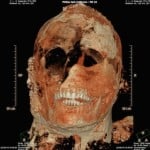
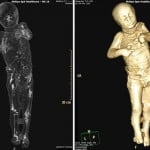
Sonuçlar, katılaşan kül parçalarının hala belli oranda iskelet içerdiğini ve dişlerin neredeyse mükemmel derecede kaldığını işaret ediyor.
Vezüv patlamasının neredeyse 2 bin yıllık kurbanları üzerindeki incelemelerden Reuters objektifine takılan görüntüler şöyle:
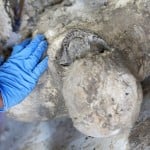
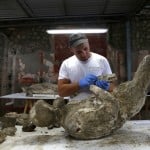
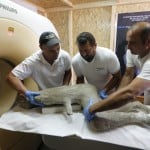
Researchers prepare the plaster cast mould of a Roman boy from an ancient Roman city as they put the body through a CAT (Computerised Axial Tomography) scan in Pompeii, September 29, 2015. An expert team made up of archaeologists, radiologists, orthodontists and anthropologists began on September 2015 to use CAT scan technology to peer inside the plaster cast moulds of Pompeii’s victims, in a study that has added more detail to previous findings. A 16-layer scan had to be used in order to penetrate the hardened plaster but the results showed up impressive skeletal remains and near perfect teeth. Picture taken September 29, 2015. REUTERS/Ciro De Luca
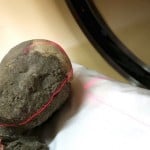
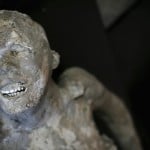
A combination photograph shows a CAT (Computerised Axial Tomography) scan of the head of a resident from an ancient Roman city in Pompeii in this September 22, 2015 handout. An expert team made up of archaeologists, radiologists, orthodontists and anthropologists began on September 2015 to use CAT scan technology to peer inside the plaster cast moulds of Pompeii’s victims, in a study that has added more detail to previous findings. A 16-layer scan had to be used in order to penetrate the hardened plaster but the results showed up impressive skeletal remains and near perfect teeth. REUTERS/Press Office of Soprintendenza Speciale per Pompei, Ercolano e Stabia/Handout via ReutersATTENTION EDITORS – THIS PICTURE WAS PROVIDED BY A THIRD PARTY. REUTERS IS UNABLE TO INDEPENDENTLY VERIFY THE AUTHENTICITY, CONTENT, LOCATION OR DATE OF THIS IMAGE. THIS PICTURE IS DISTRIBUTED EXACTLY AS RECEIVED BY REUTERS, AS A SERVICE TO CLIENTS. FOR EDITORIAL USE ONLY. NO RESALES. NO ARCHIVE.
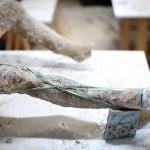
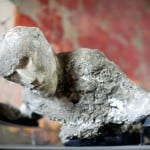
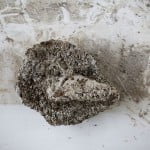
A shoe-clad foot is seen sticking out of a plaster cast mould of a Pompeii victim, at the laboratory in the ancient Roman city, Pompeii, October 13, 2015. An expert team made up of archaeologists, radiologists, orthodontists and anthropologists began on September 2015 to use CAT scan technology (computerised axial tomography) to peer inside the plaster cast moulds of Pompeii’s victims, in a study that has added more detail to previous findings. A 16-layer scan had to be used in order to penetrate the hardened plaster but the results showed up impressive skeletal remains and near perfect teeth. Picture taken October 13, 2015. REUTERS/Alessandro Bianchi